
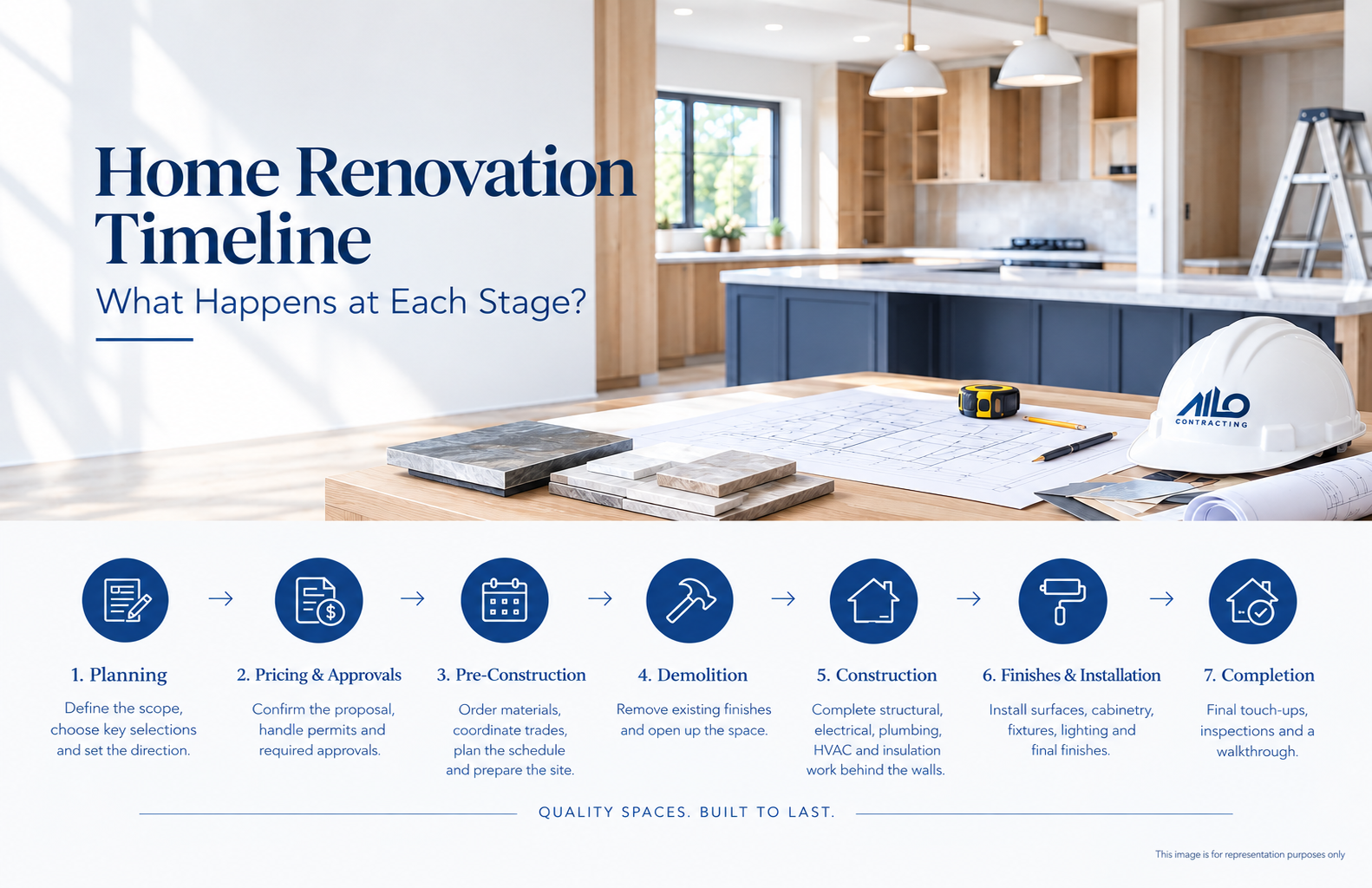
A home renovation involves far more than demolition and installation. Behind every completed space is a sequence of planning, pricing, material selection, approvals, construction, and coordination.
While every project is different, most renovations follow a similar progression. Understanding each stage helps keep decisions timely, expectations realistic, and the overall process more predictable right from the first conversation through completion.
Planning: Defining the Scope
The process of any home renovation begins well before the construction starts. This early stage focuses on understanding the existing space, clarifying what needs to change, taking accurate measurements, and establishing the overall direction of the project.
Key selections often begin here as well — cabinetry and storage, flooring and tile, plumbing fixtures, lighting, and finishes. The more of these decisions that are resolved early, the more realistic and reliable the construction plan becomes.
Pricing and Approvals: Preparing the Project
Once the scope is defined, the project can be priced in detail. A strong renovation proposal clearly outlines the work, materials, and costs involved. Depending on the project, permits, strata requirements, or other approvals may also need to be addressed at this stage.
It is equally important to establish how any changes will be handled once construction begins, since late decisions can affect both schedule and cost.
At Ailo Contracting, detailed line-by-line fixed-price proposals are provided within the agreed scope, giving homeowners a clear picture of what all is included before moving forward.
Pre-Construction: Materials, Scheduling, and Site Preparation
With the project confirmed as per the defined scope, practical preparation begins. Materials are ordered, trades are coordinated, and the construction schedule is organized. Items such as custom cabinetry, windows, specialty fixtures, and certain finishes often have longer lead times, so early ordering is essential.
The home itself is also prepared for construction. This includes arranging site access, protecting areas that are not part of the renovation, coordinating deliveries, and planning for waste removal.
Demolition: Opening Up the Space
Physical work starts with demolition. Depending on the scope of the project, this may involve removing flooring, cabinetry, walls, fixtures, ceilings, or other finishes.
Opening up the space can sometimes reveal conditions that were not visible during initial planning, particularly in older homes. Existing wiring, plumbing, or structural elements may need attention before the next stage can proceed.
Construction: Work Behind the Walls
Once the space is open, the systems that sit behind the finished surfaces are addressed. This stage can include structural changes and framing, electrical wiring, plumbing, heating and ventilation, and insulation.
These elements must be completed — and inspected where required — before walls and ceilings can be closed. Although much of this work will eventually be hidden, it plays a critical role in how the finished space performs.
Finishes and Installation: Bringing the Space Together
With the behind-the-wall work complete, the renovation begins to take on its final appearance. Drywall, tile, flooring, and other major surfaces are installed, followed by cabinetry, countertops, plumbing fixtures, lighting, hardware, doors, and remaining finishes.
This stage requires careful coordination. Cabinetry, for example, often needs to be in place before countertops can be templated, and certain fixtures depend on finished surfaces being ready. The selections made during the planning phase finally come together here.
Completion: Final Details and Walkthrough
The last stage focuses on finishing the remaining details. Touch-ups, adjustments, fixture checks, and any outstanding items are completed. A final walkthrough confirms that the agreed scope has been addressed and delivered.
Once this stage is finished, the construction phase is complete and the space is ready to be enjoyed.
How Long Does a Home Renovation Take?
There is no single timeline that applies to every project. Project size, permits, material lead times, structural changes, and the condition of the existing home all influence the overall duration even for a simple home renovation.
It is also important to remember that the renovation timeline begins before demolition. Planning, selections, pricing, approvals, and material ordering all affect how smoothly construction progresses. Strong coordination from the outset makes it easier to keep the project moving.
Ready to Start Your Renovation?
A clear plan makes each stage more predictable and helps keep the project on track from early discussions through final completion.
At Ailo Contracting, homeowners are guided through every phase of the renovation process with detailed proposals and a structured approach that covers planning, pricing, construction, and completion.
Thinking about renovating your home? Connect with us to get started.